Wat als… we controle willen houden over AI?
What if… we want to maintain control over AI?
Friday 9 October, 17.00-20.00, UvA University Library, Vendelstraat 2-8, Amsterdam
Let yourself be inspired in the UvA University Library on Friday 9 October from 17.00 to 20.00 during an evening organized by the National Research Agenda project ‘InDeep’ on responsible artificial intelligence. Beyond the hype and headlines, experts, artists, and visitors will come together to explore the intellectual, ethical, and artistic dimensions of AI.
How can citizens regain a sense of control over these technological developments? Choose from five thought-provoking sessions (two will be presented in Dutch), experience AI demo’s, and join the conversation about the future of AI. The evening will conclude with drinks and light refreshments.
Register today via this form for the sessions you are interested in. The event takes place during the UvA Alumni Week but everyone is welcome to register. Registration through the UvA Alumni is now full, but this link provides a limited amount of additional spots– so do not wait too long.
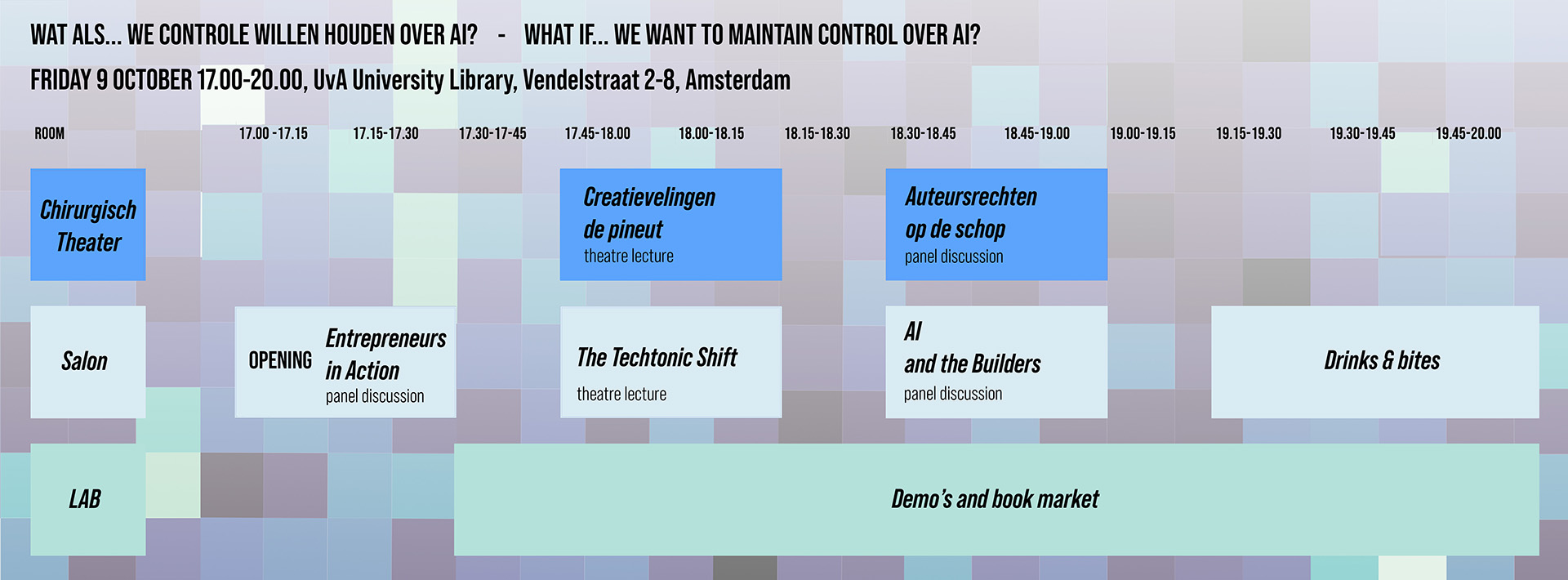
Opening and Entrepreneurs in action. Innovation and regulation in the Netherlands
17.00-17.30. De Salon
After the opening of our evening there will be a panel discussion (in English) with Julia Berezutskaya (UCANACT) and Tijmen Altena (Global Campus), and the audience. We investigate what Dutch AI companies need to flourish, and whether the interests of companies and citizen are aligned. Is it good or bad for the Dutch citizens if AI companies have to comply with strict regulations?
The Techtonic Shift. Paul Verhagen on AI, Power, and Democracy
17.45-18.15. De Salon
In this theatre lecture, Paul Verhagen (The Hague Centre for Strategic Studies) explores (in English) how the global AI race is fundamentally reshaping geopolitical power dynamics. Can a world increasingly dominated by AI remain democratic and liberal? And can Europe afford to stay technologically dependent on the United States and China? Verhagen examines the need to reform our societal institutions and presents insights from his new book, The Techtonic Shift.
Creatievelingen de pineut. Wat AI met creatief werk doet
17.45-18.15. Het Chirurgisch Theater
In dit theatercollege (in het Nederlands) legt expert Jaap Jumelet (Rijksuniversiteit Groningen) uit waarom AI zoveel data nodig heeft, bijvoorbeeld om muziek te kunnen genereren. En ook waarom componisten, kunstenaars en schrijvers zo boos zijn dat hun werk zonder toestemming door AI-bedrijven gebruikt is, en waarom het technisch zo moeilijk is om te traceren wiens werk een rol heeft gespeeld in de AI-creaties.
AI and the builders. Meet the builders of tomorrow’s AI: live interview and discussion
18.30-19.00. De Salon
In a live interview and discussion (in English) with Onno Zoeter (head AI research Booking) and Akash Raj Komarlu (CTO and Co-founder of Whispp), we ask what it takes to be successful in the new AI-dominated society. What skills do workers need to have? How can citizens remain safe and prosperous? Is still fun to work in AI, or is everyone stressed out because of the rapid progress and new perspectives on its downsides? What new shocks should we prepare for? Hear it from the builders that are building the next year’s AI today.
Auteursrechten op de schop. Ontdek de toekomst van auteursrecht en AI.
18.30 -19.00. Het Chirurgisch Theater
In deze discussie (in het Nederlands) met Daan Archer (CEO and Co-founder van Copyright Delta) en Kees Bulder (Legal Counsel bij BumaStemra) bespreken we de beschuldigingen dat AI-bedrijven massaal auteursrechten hebben geschonden, en vragen we ons af of eerlijke AI mogelijk is. Wat betekenen auteursrechten nog in een tijd dat zoveel teksten, muziek en beeld door AI worden gegeneerd? Met experts over auteursrechten en de creatieve sector.
From 17.30 onwards, in collaboration with the Amsterdam Data Science Centre, you can explore a range of interactive AI demos, including demonstrations of fake speech detection and emotion recognition. You can also browse our curated selection of books, featuring inspiring books on AI, innovation, and the future of technology.
From 19.15 onwards, enjoy drinks and light bites while continuing the conversation and networking with fellow participants..
Confirmed speakers and presenters, more to follow.
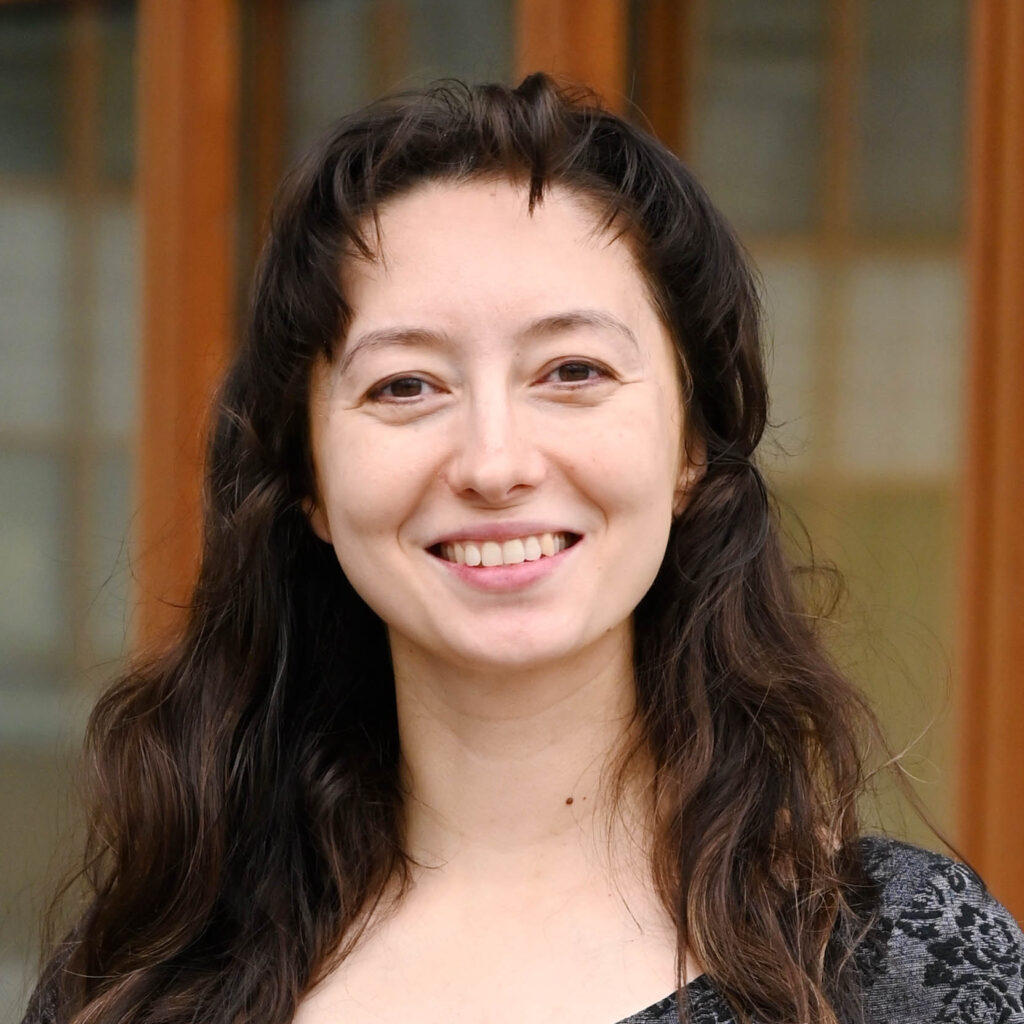
Julia Berezutskaya is a neuroscientist, entrepreneur and founder of UCANACT. Her work bridges cutting-edge brain-computer interface research and commercialization, with a focus on enabling communication and digital independence for people with severe motor disability. At UCANACT, she leads the development of AI-powered neurotechnology designed for real-world use at home and in everyday life.
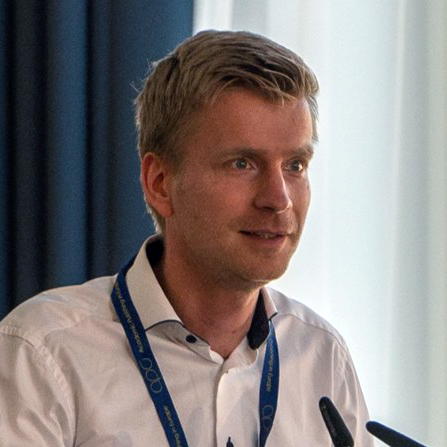
Tijmen Altena is co-founder and Chief Technology Officer of Global Campus. Global Campus provides semantic search solutions for funders, publishers and institutions in the academic world. Clients like the ERC, TU Delft and the American Association of Cancer Research use Global Campus to find reviewers and academic experts. The application of (generative) AI exploding across academia is causing multiple challenges, turning questions of regulation and guardrails to the foreground.
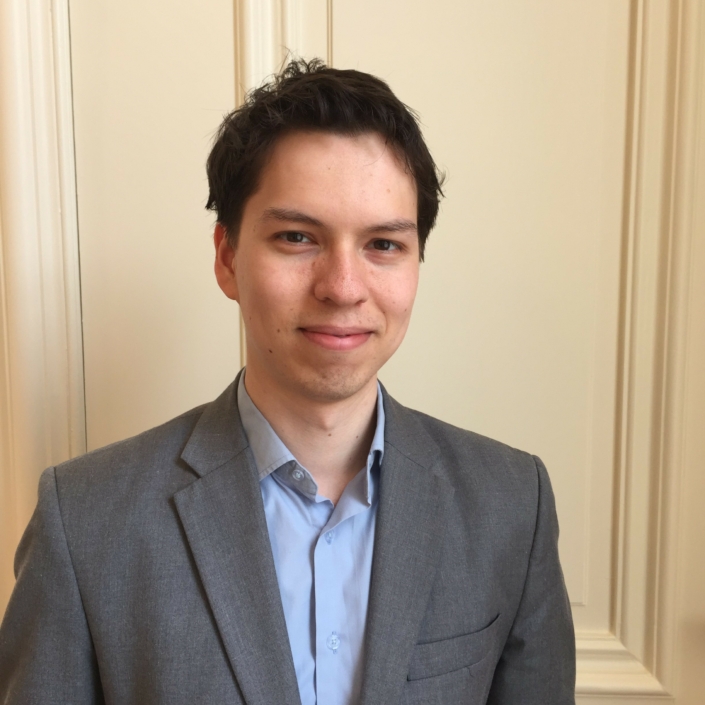
Paul Verhagen is a Dutch-American-Chinese analyst and Senior Fellow at The Hague Centre for Strategic Studies. He is the author of The Techtonic Shift, which explores how the return of geopolitics and rapid technological change are reshaping the world order. A graduate of the University of Amsterdam and Amsterdam University College, he later returned to teach as a lecturer. Verhagen is a prominent voice in international debates and is a frequent commentator in Dutch and international media.
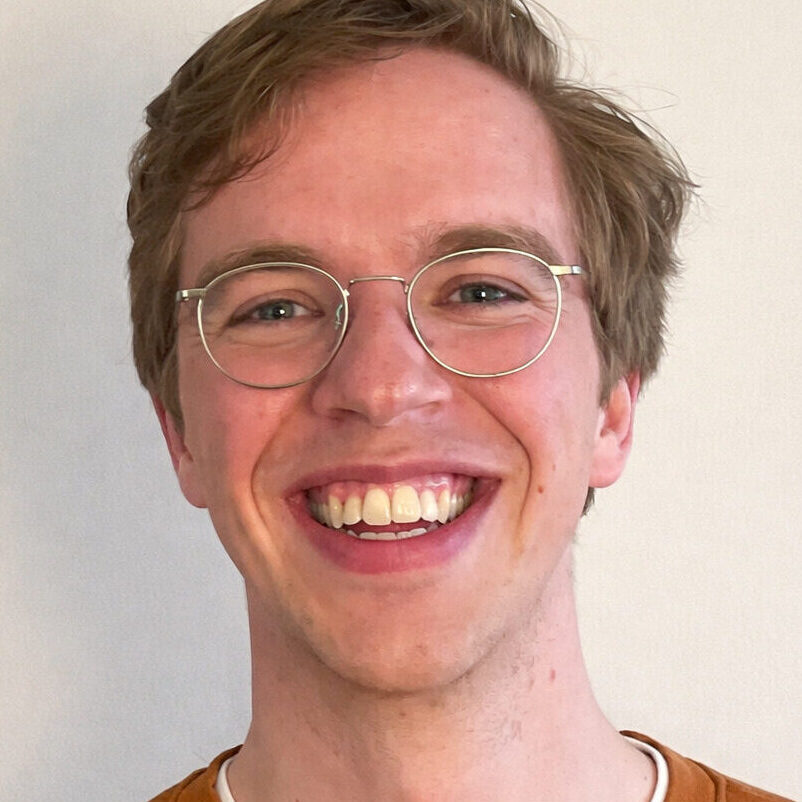
Jaap Jumelet is a postdoctoral researcher at the University of Groningen. His research agenda is centered around the question of “what do language models really know about language?”. In his PhD, at the University of Amsterdam, he approached this question from an interpretability perspective, developing tools to open the black box and understand their inner workings. In his post-doc he is now focusing on multilingual evaluation, trying to understand how language models handle multilinguality and whether certain languages are harder to process than others.
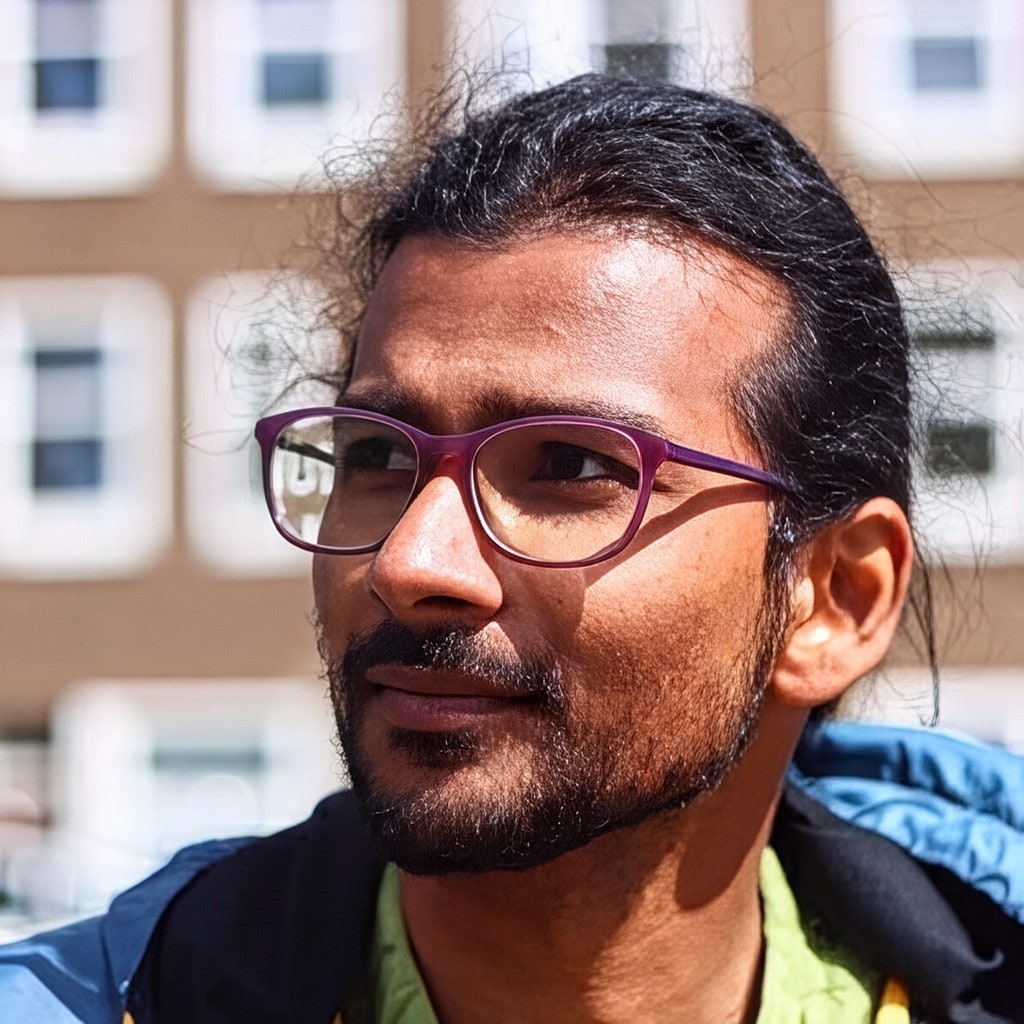
Akash Raj Komarlu is an accomplished technology professional and the Co-founder and CTO of Whispp, a company dedicated to empowering individuals with voice disabilities through AI. His extensive background in artificial intelligence, speech technology, and signal processing is crucial in shaping Whispp’s real-time voice AI solution. Komarlu holds a Master of Science in Artificial Intelligence from the University of Amsterdam and has prior experience as a speech engineer. He is instrumental in developing AI models that convert whispered or impaired speech into a clear, natural voice, enabling seamless communication for users.
Daan Archer is CEO and co-founder of Copyright Delta, a neutral data platform that aligns music rights (ISRC–ISWC) to enable licensing across gaming, AI, and digital platforms, while reducing royalty gaps. It is used by 30+ organisations to improve attribution, unlock revenue, and support data provenance and detection of unregistered uses. He has over 20 years of experience in AI software development, data sciences, platform strategy, and public-private partnerships. Previously he worked as a Dutch AI technology diplomat in Japan, was a MIT Sloan Fellow, Fulbright Scholar, and affiliated with the MIT Media Lab. A former University of Amsterdam student, he holds an MSc in AI and an MBA from MIT Sloan. Lifelong skateboarder.

Kees Bulder works at BumaStemra as Legal Counsel, where he specialises in AI-related issues and supports licence negotiations with digital service providers. Before joining BumaStemra, he completed the master’s programme in Information Law at the University of Amsterdam. Since 2023, he has also taught the annual course “Copyright & Agreements” at ArtEZ Conservatoire in Arnhem.