Events:
-
Workshop "How Computing is Changing the World"
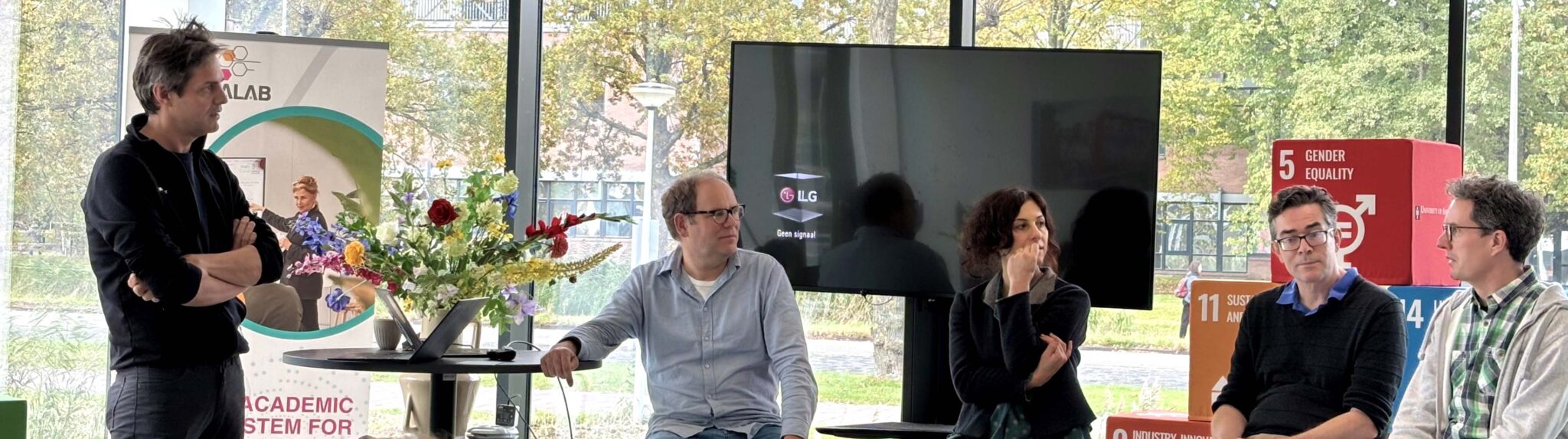
In October 2025, the QISS and InDeep research groups met at the Sustainalab (Matrix One) in Amsterdam to explore in a joint workshop the synergies and challenges of AI and quantum technologies. As both fields advance rapidly, the workshop focused on their technological progress as well as their ethical, legal, and societal implications.
The morning session addressed technological perspectives. After a welcome, InDeep project leader Jelle Zuidema outlined the current state of AI, highlighting the black-box problem. Mehrnoosh Sadrzadeh (UCL) and Martha Lewis (UvA) followed with quantum-inspired approaches to modelling language and vision in AI. Ronald de Wolf (CWI & UvA, QuSoft) concluded with an overview of quantum computing, linking it to Zuidema’s AI analysis. A panel discussion with Christian Schaffner (UvA, QuSoft) and chaired by Joris van Hoboken (UvA) explored common challenges, research stages, and opportunities across the two domains.
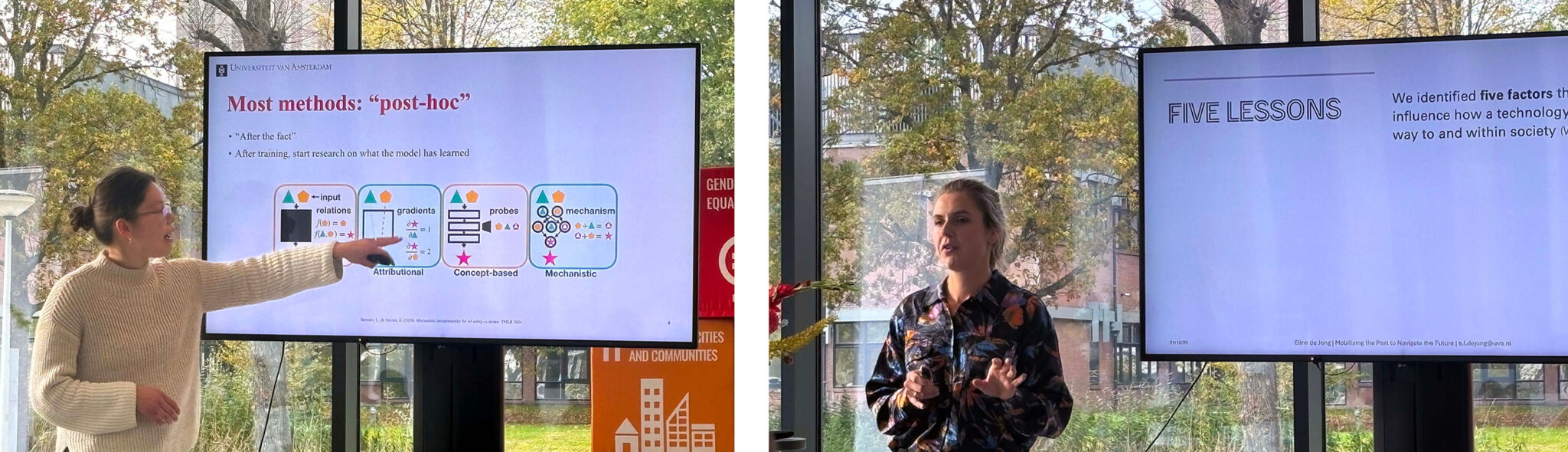
The afternoon session focused on societal themes. Evert van Nieuwenburg (Leiden University) opened with a presentation on how quantum games, such as Quantum Tic-Tac-Toe, can help people learn quantum principles. Eline de Jong (UvA) shared five lessons for embedding new technologies in society, suggesting they apply to quantum tech as well. Angela van Sprang (UvA, ILLC) presented concept-bottleneck models as tools for improved AI oversight, and Matteo Fabbri (UvA) argued for proactive standards for recommender systems and other emerging technologies. In the panel discussion, led by Zuidema, participants from both AI and quantum backgrounds reflected on responsible innovation and the risks and opportunities of uncertain technological futures.
-
Workshop "Visions of Quantum Technologies"

Thursday 2 October
Workshop “Visions of Quantum Technologies: The Ethics of Technofutures”Emerging technologies, such as quantum technologies, already exist in the form of future-oriented projections—visions, expectations, hopes, and fears. These projections matter: they shape the development of technologies by influencing the decisions we make today. As such, “technofutures” are a meaningful subject for ethical reflection.
In this workshop, QISS PhD Candidate Eline de Jong explored how to put an “ethics of technofutures” into practice, particularly in the context of early-stage technologies like quantum. The focus was placed on the approach of vision assessment as a way of ethically analysing technological visions.
Event details
Date: 2 October 2025
Time: 13:30 -18:00
Location: Institute for Advanced Study, Oude Turfmarkt 145-147
Programme
The originator of vision assessment, Professor Armin Grunwald, will deliver a keynote lecture, followed by several presentations showcasing different ways in which this approach has been applied. There will be ample time for discussion and for exchanging ideas on the ethical relevance of technofutures and the most effective ways to study them. This theme aligns closely with the UvA’s newly launched RPA on methodologies for fostering public engagement with science and technology. -
QISS event on PQC transition in Finance
 On 17 September 2025 QISS held an online event on Post-quantum Cryptography Transition in the Financial Sector where QISS Postdoctoral Researcher Laima Jančiūtė presented her research on the subject in an insightful exchange of perspectives with leading experts in the field Mike Silverman, Chief Strategy and Innovation Officer, FS-ISAC, Dennis van Heijst, Supervisor Operational and IT risk, Dutch Central Bank (QISS project partner), Jaime Gómez García, Global Head of Santander Quantum Threat Program and Chair of the Europol Quantum Safe Financial Forum and Angela Dupont, Adviser, Bank for International Settlements Innovation Hub. The webinar, moderated by QISS member Professor Christian Schaffner, welcomed over 70 participants from around the globe affiliated with central and commercial banks, supervisory authorities, industry associations, vendors, research institutions and other stakeholders. The financial sector is one of the most security-sensitive domains in which, in light of fast development of quantum computing technology and the threat it poses to the currently used encryption methods, quantum-readiness should be considered a top priority. The discussion focused on the state of play, challenges and the way forward in enacting the crucial shift towards quantum-safe financial ecosystem.
 -
QISS launch event at Quantum Meets
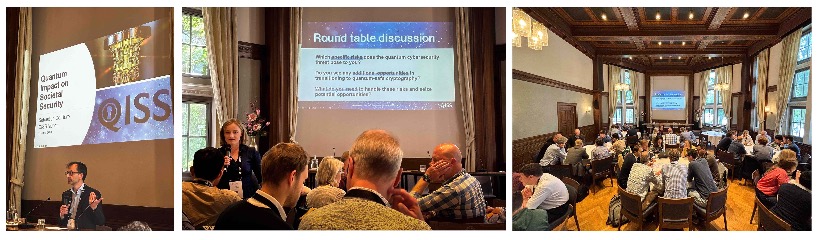
On Tuesday 11 June 2024 in collaboration with our partners Quantum Delta NL, NWO, TNO and ECP we organized our official QISS research launch event Quantum Computing and Cybersecurity: Cryptocalypse or Overhype? This event took place during Quantum Meets ’24, a free three-day event in the KIT Institute Amsterdam, connecting quantum researchers, businesses, end-users, and policymakers. The QISS research group had organized an exciting afternoon session, focusing on the impact of quantum computing on cybersecurity and the society wide transition it calls for.
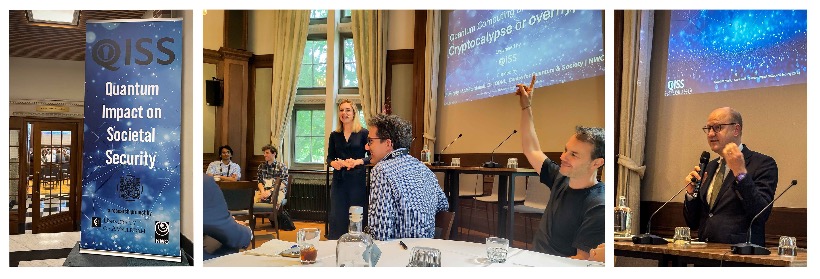
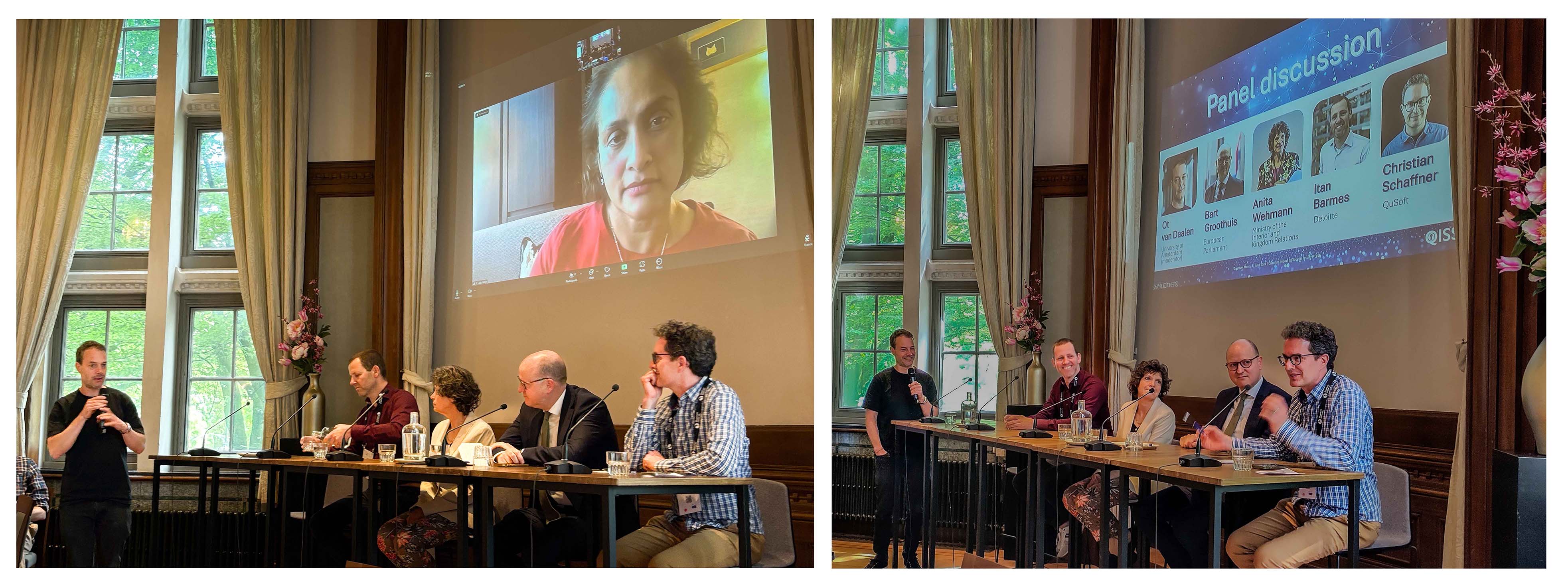
There were presentations and a round table discussion with our invited international experts from academia, government, and the private sector: Bart Groothuis (member European Parliament), prof. Michele Mosca (U. of Waterloo), Anita Wehmann (Ministry of the Interior and Kingdom Relations), Jaya Baloo (CSO - Senior Vice President, Rapid7), dr. Itan Barmes (Deloitte), prof. Christian Schaffner (UvA and QuSoft), and mr. Ot van Daalen (UvA). After the stimulating discussion, participants took part in an interactive and explorative session for a quantum-safe society. We ended our launch with some celebratory drinks.
-
Workshop “Understanding Science and Technology”
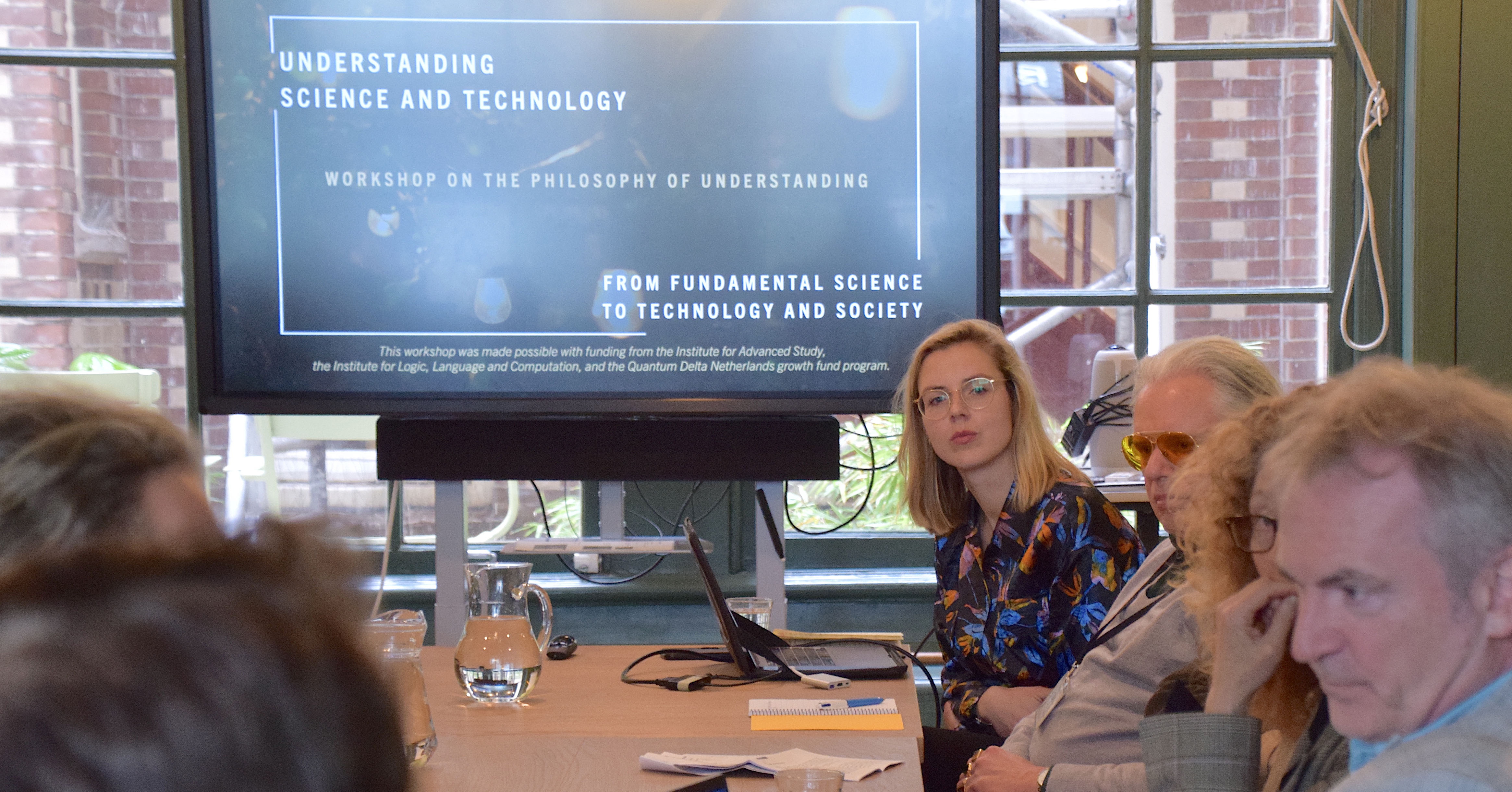
Asking the right questions, finding sensible answers—it all hinges upon understanding. An understanding of the world around us, of the capacities and ramifications of our technologies, and of what matters to us. But what does it really mean to 'understand' something? On 3 April, Sebastian De Haro and Eline de Jong hosted a workshop titled 'Understanding Science and Technology: From Fundamental Science to Technology, Quantum and Society' at the Institute for Advanced Study of the University of Amsterdam. Together with speakers like Professor Henk de Regt (Radboud University) and 20 participants from different disciplines, they delved into the nexus of understanding in science, technology, and society, pondering questions like: Can AI deepen scientific understanding? What kind of understanding is involved in designing and using technology? And what defines 'public' understanding of science and technology?
-
Atlantic Assembly learns about Quantum
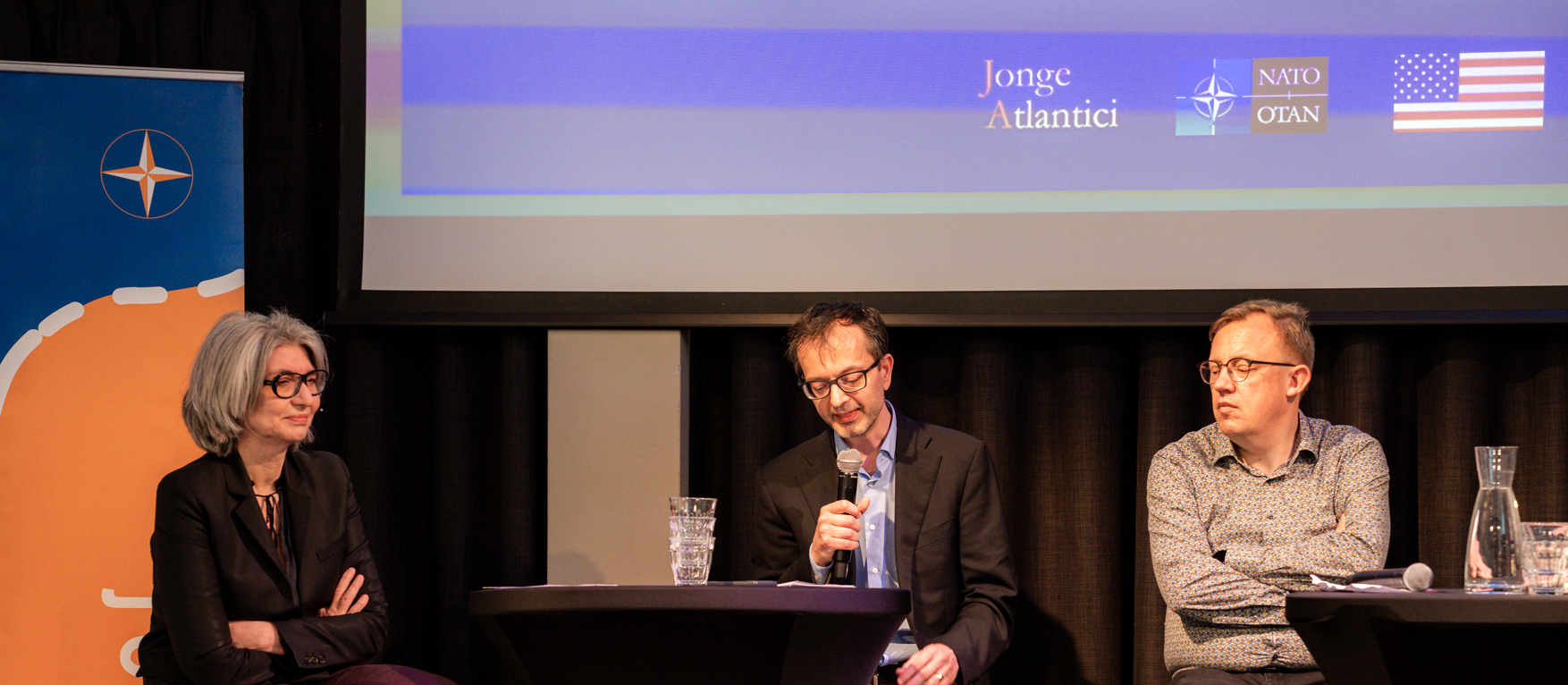
Sebastian De Haro, QISS project leader, spoke at the Atlantic Assembly panel Introducing quantum: The effects of new technology on quantum technology. Together with experts Lokke Moerel, and Frank Phillipson, Sebastian discussed the opportunities and threats of quantum computing for the global (future) security climate and the societal impact of the quantum revolution.
-
View discussion on Cybersecurity in a Quantum World
In March Christian Schaffner joined Ari Schwartz, Philomena Lavery, and John Fokker in a panel at CyberNext Brussels. View and listen to their discussion on Cybersecurity in a Quantum World on YouTube.
-
Quantum Safe Internet Spring School
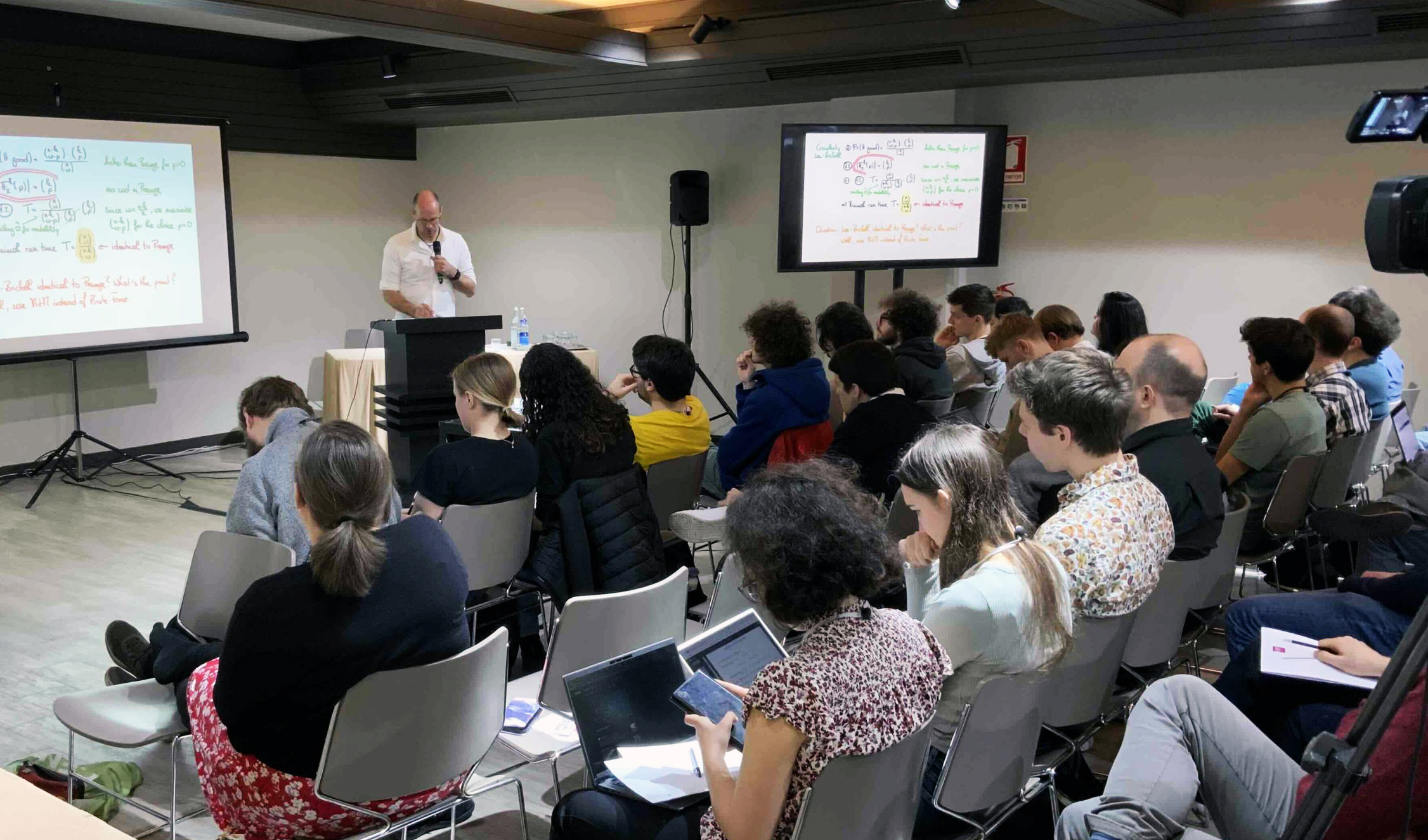
QISS researcher Ailsa Robertson joined in March the Quantum Safe Internet spring school in Porto, which was on the topic of Post Quantum Cryptography. Some of the most prominent researchers in the field were speaking on topics including lattices, codes, isogenies, hash-based cryptography and the quantum random oracle model. The purpose of this event was to introduce PhD students to the math/theoretical computer science behind the leading candidate schemes for post quantum cryptography. Christian Schaffner gave the ‘Quantum random oracles’ model talk.
-
Introducing QISS at Quantum Delta
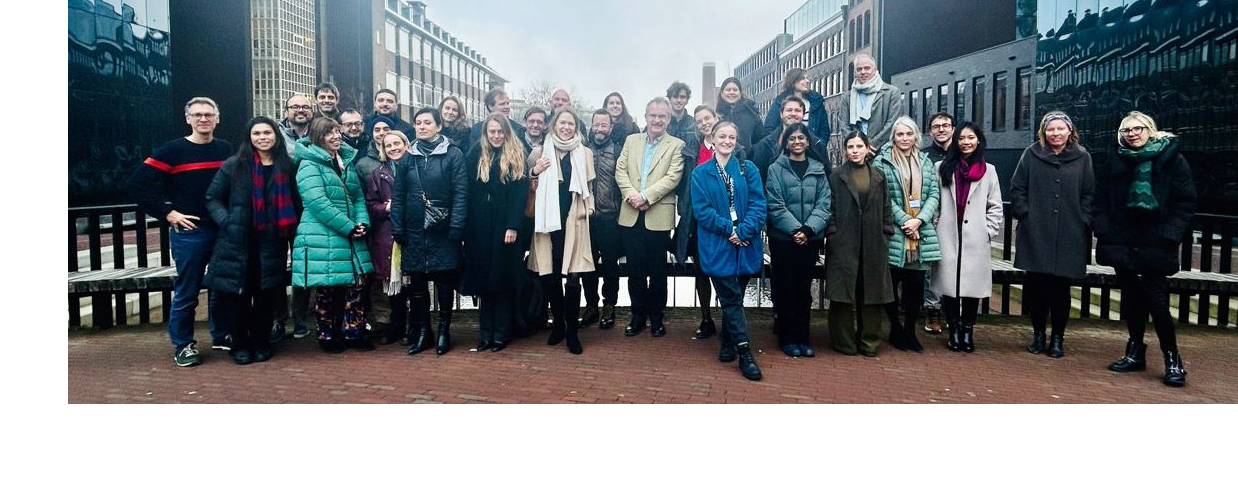
QISS researcher Ailsa Robertson introduced the QISS project at the Quantum Delta NL Action Line, which was run by the Centre for Quantum in Society.
-
Ideas on Emerging Technologies in München
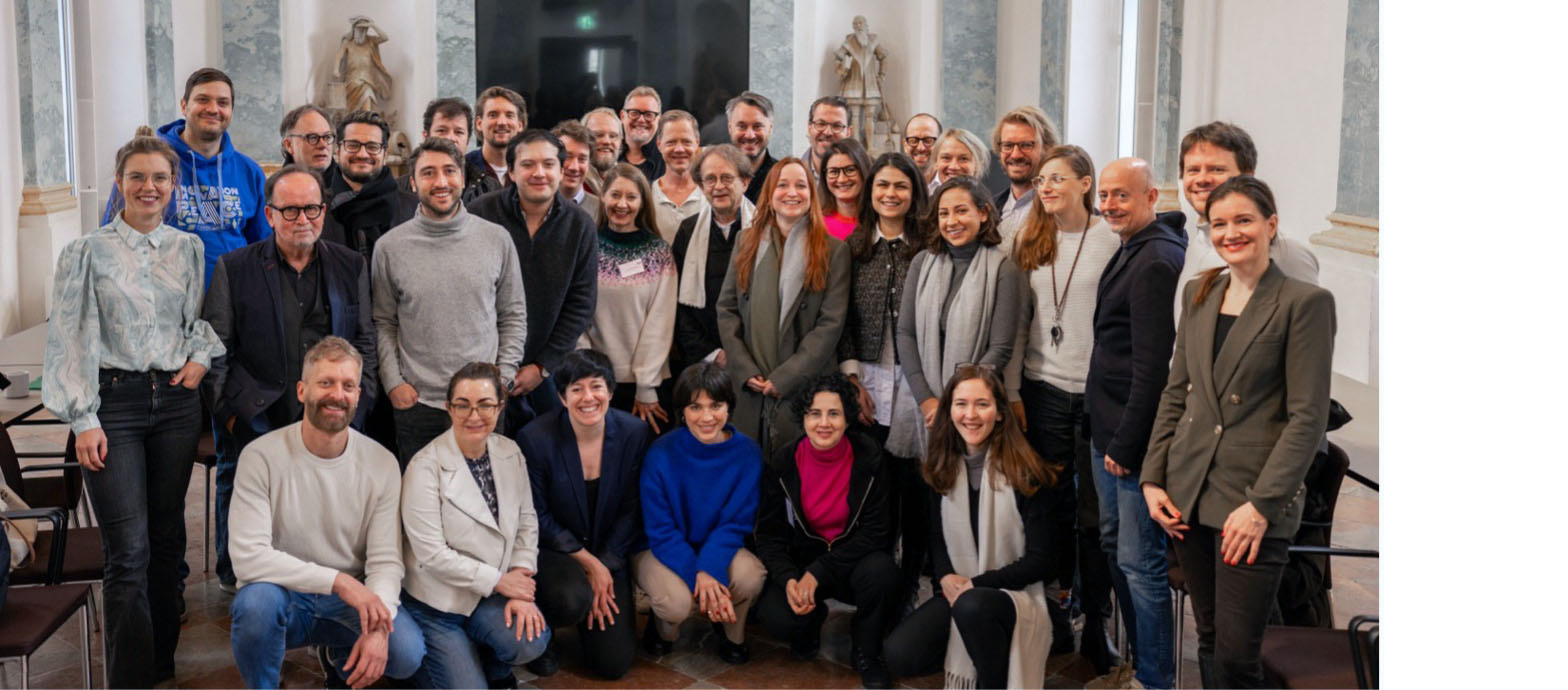
During Technical University München’s Festival of Ideas – a conference aimed at exchanging ideas on policy for new and emerging technologies – Eline de Jong chaired a discussion session on how we can deal with risks from future technologies and gave a lighting speech about the importance of understanding: “it is important that we understand how the technology works in order to achieve meaningful way to think about it.”